
The 4130 Clone Is the Only Reason a Replica Daytona Is Worth Buying in 2026
I have bought four replica Daytonas over the past three years. The first was a $280 mistake that looked acceptable in photos and felt like a toy on the wrist. The second was a 7750-based build that worked for six months before the chronograph pushers started feeling like a sticky door handle. The third and fourth were 4130 clones, and that is the point where the replica game stopped feeling like a compromise. If you are searching for a replica rolex chronograph and you are not paying attention to the movement inside, you are making a decision with the least important information and ignoring the one variable that determines whether you will still be wearing the watch in eighteen months. Plenty of replica rolex listings will show you a perfect dial and never mention what is ticking underneath. This is the comparison I wish someone had handed me before I wasted money on the wrong tier.
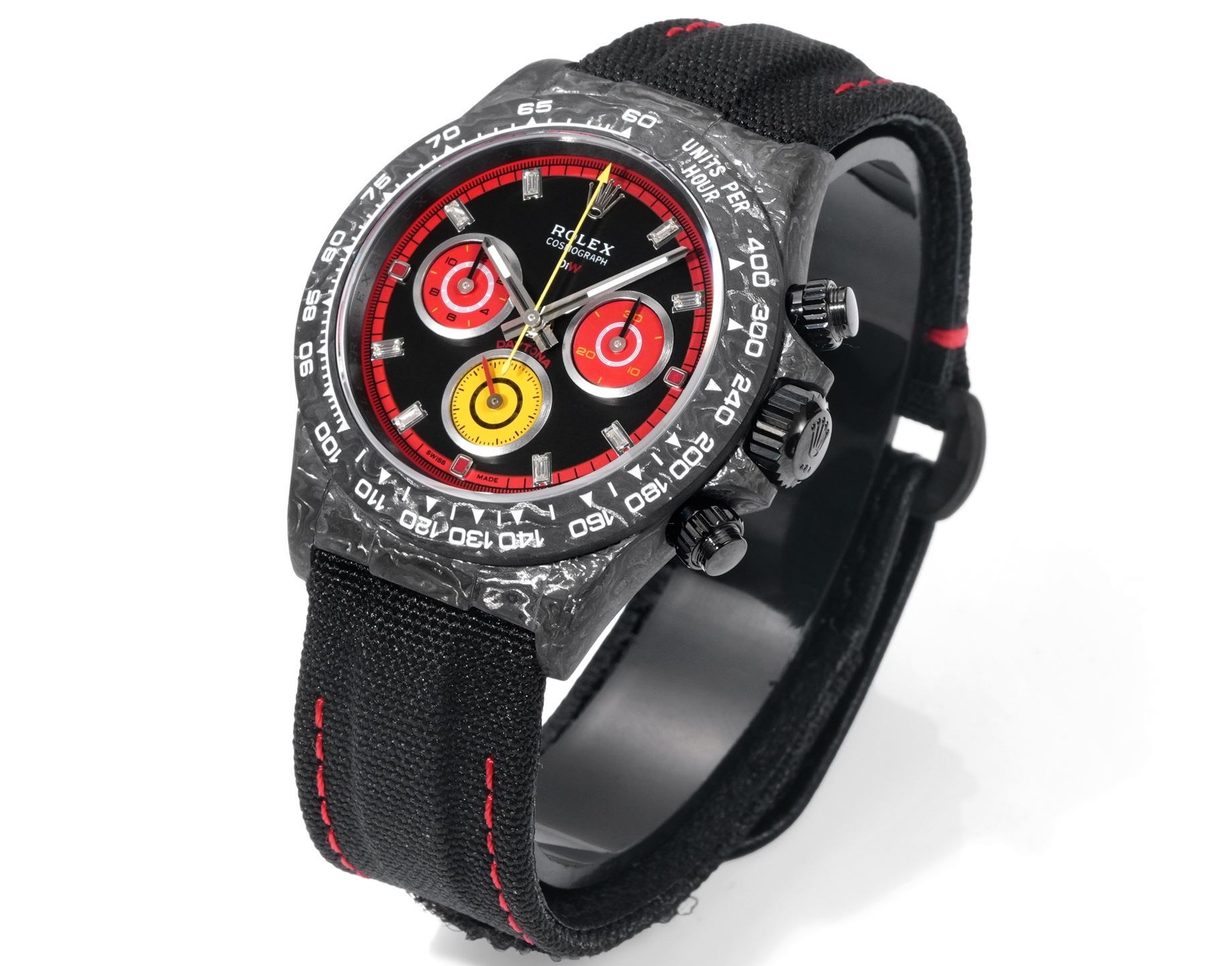
Why the 4130 Clone Is the Only Movement Decision That Matters
The single most useful thing I can tell you about buying a Daytona replica is this: the movement is not a spec on a listing. It is the entire ownership experience. A true 4130 clone is not a modified generic chronograph. It is an architecture-level copy of the genuine Rolex caliber, designed around the same column wheel and vertical clutch layout that makes the real Daytona’s pushers feel clean and its sweep hand start without a stutter. That structural similarity matters because the chronograph is the most mechanically demanding function on the watch. If the movement underneath the dial was not designed for that function from the ground up, every press of the pusher is a negotiation rather than an action.
The reason this deserves paragraphs rather than a bullet point is that the replica rolex market is full of Daytonas that look correct on a screen and behave incorrectly on a wrist. The most common alternative is a modified 7750, a movement that was never intended to sit under a Daytona dial. Sellers describe it as “4130 style” or “chronograph movement,” but the subdial spacing is off, the pusher feel is stiff or inconsistent, and the long-term reliability of the modified chronograph module is a coin flip. From what I have seen in owner threads and in my own disappointing 7750 purchase, the gap between a 7750-based Daytona and a proper 4130 clone is not a small quality step. It is a different category of product.
The practical impact on your decision is straightforward. A 4130 clone typically delivers a power reserve in the 65 to 72 hour range, close enough to the genuine specification that you can treat it like a normal automatic watch rather than a fragile ornament you wind every morning. Timekeeping on a healthy unit generally sits within a few seconds per day, and the chronograph engagement feels integrated rather than bolted on. That combination is what separates a watch you can wear regularly from a watch you are afraid to use. If the best replica watches in your shortlist do not specify a 4130-family clone by name, you are almost certainly looking at a lower tier dressed up in better photos. This is also where most replica rolex buyers get quietly sorted into a tier without realizing it happened.
The Real Hierarchy: 7750 Modified, Shanghai 4130, and Dandong 4130 Compared
The replica Daytona movement conversation usually collapses into “4130 good, 7750 bad,” which is true at the extremes but unhelpful when you are comparing actual options on a dealer’s page. In my experience, there are three meaningful tiers, and the differences between them are not cosmetic. They show up in pusher feel, serviceability, power reserve, and how long the watch stays pleasant to own. Before drilling into each tier, it is worth understanding the logic that separates them: a movement built for a chronograph from the ground up behaves differently from a movement adapted to fit one, and no amount of case finishing hides that difference once the watch is on your wrist.
The 7750 modified tier is a visual solution, not a mechanical one
A 7750-based Daytona exists because it is cheap and it photographs well. The base movement is reliable enough in its original form, but the modifications required to fit a Daytona-style dial and case introduce compromises that show up after the honeymoon phase. The pusher feel is the first tell. On a genuine-spec 4130 clone, the chronograph start is crisp and the reset snaps back to twelve without hesitation. On a modified 7750, the pushers often feel vague or require a firmer press, and the sweep hand can stutter on startup. The other issue is serviceability. A watchmaker who knows a standard 7750 may not know the specific modifications used in a Daytona build, which turns a routine service into a diagnostic exercise. The $280 to $450 range is where these watches live, and in my experience, they are worth buying only if you accept that the chronograph is decorative and the watch is disposable.
The Shanghai 4130 is a middle path with a shorter track record
The Shanghai 4130 is a genuine step up from a modified 7750. It replicates the 4130 layout more faithfully, and the power reserve on the better examples reaches around 72 hours, which is close to the genuine number. The thickness is also more convincing than a 7750 build, and the winding direction and pusher feel are closer to what a Daytona should feel like. Where it falls short is long-term evidence. The Dandong 4130 has been in circulation longer and has accumulated a larger base of owner experience, and the consensus in the community is that the Dandong version is the more proven quantity in stability and parts familiarity. A Shanghai 4130 is not a bad movement, but if two watches are within $100 of each other, I would take the Dandong every time. The premium is small and the risk reduction is meaningful.
The Dandong 4130 is the benchmark for a reason
The Dandong 4130, often listed as DD4130, is the movement that most serious Daytona builds converge on, and that convergence is not an accident. It copies the genuine architecture closely enough that the chronograph operates as a cohesive system: column wheel, vertical clutch, correct subdial spacing, and a pusher feel that does not announce itself as aftermarket. The reliability reputation is earned rather than advertised. Owner reports across multiple years describe low failure rates and stable timekeeping, and the movement has been used in top-tier builds from multiple factories rather than being a single-shop experiment. From a buyer’s perspective, the DD4130 is the point where the watch stops being a gamble and becomes a product with a predictable ownership profile. It is not indestructible, and it is not a genuine Rolex movement, but it behaves like a purpose-built chronograph rather than a workaround. That is the difference you are paying for, and it is the difference you will feel every time you press the top pusher.
Clean Factory vs BT Factory vs VSF: What Actually Separates the Top Builds
Once you have decided that a 4130 clone is the right direction, the factory question becomes the next real decision. The names that come up repeatedly in 2026 are Clean, BT, and VSF, and the honest answer is that there is no single winner across every reference and every batch. What matters is understanding what each factory tends to do well and where the inconsistency lives. A factory name is a starting point for a shortlist, not a guarantee about the specific watch that will ship to you. The top factories all source the same DD4130 movement, so at this tier you are comparing finishing priorities and batch consistency rather than movement quality. That distinction is what makes the comparison useful instead of a fan debate.
Clean Factory built its reputation on finishing consistency. In my experience and in the owner reports I trust, Clean’s dial printing is typically crisp, the ceramic bezel engraving has accurate depth, and the case polishing sits closer to genuine standards than most of the competition. The DD4130 builds from Clean have a stable, uniform feel, which is exactly what you want if you are buying a watch to wear rather than to photograph and resell. The caveat is availability. Clean’s output has been disrupted, and old stock dominates the current market for certain references, which means you are often buying from what remains rather than from a fresh production run. That does not make a Clean Daytona a bad purchase, but it does mean you need to verify what you are getting rather than assuming the name guarantees current production.
BT Factory is the choice for buyers who prioritize case shape and pusher feel above all else. Some owners strongly prefer BT’s case geometry on the 116500, and the pushers are frequently described as feeling closer to the genuine article than the alternatives. BT also tends to push slightly harder on dial sunburst effects and subdial depth, which gives the watch a more dimensional look under natural light. The trade-off is consistency. I have handled excellent BT pieces and I have seen QC photos of BT watches with minor alignment issues that should not exist at this price point. BT is a stronger choice for someone willing to examine QC photos carefully and reject a flawed unit rather than accepting whatever ships. If you want the safest possible transaction with the least mental overhead, Clean or VSF is the lower-friction path. If you want the best-case ceiling and you are willing to do the QC work, BT is worth the attention.
VSF sits in a similar conversation but with a different emphasis. VSF builds are generally regarded as strong overall, and the DD4130 platform is shared across the top factories, so the movement experience is not the differentiator. The dial color and bezel details are where VSF draws both praise and criticism depending on the batch. Some owners find certain VSF Panda dials too pale, while others consider the overall build the best balance of finishing and availability. The takeaway is that at this tier, you are not choosing between a good movement and a bad movement. You are choosing between finishing priorities and batch consistency. A super clone watch from any of these three can be excellent, but the specific unit in front of you matters more than the logo on the listing. This is also the tier where a super clone watch stops being a novelty and becomes a daily-wear candidate.
Two Buyer Mistakes That Cost Real Money
I have watched buyers lose money in this hobby for reasons that have nothing to do with bad luck. The two mistakes below are the ones I see most often, and they share a common root: treating the purchase as a photo comparison exercise rather than a product evaluation. Understanding why each mistake happens is more useful than a list of things to check, because the reasoning carries over to references and batches that no checklist covers.
Mistake one: trusting the dial and ignoring the movement designation
The most expensive mistake I see buyers make is treating the dial, bezel, and bracelet as the primary quality signals while accepting whatever movement is listed at the bottom of the page. A Daytona replica can have a perfectly aligned dial and a ceramic bezel with crisp engraving and still be built around a modified 7750 that will feel wrong within a month. The visual tier and the mechanical tier are not locked together. Sellers know that buyers scan photos first, and some replica rolex listings are built to win that scan while cutting costs on the part you cannot see. The correction is simple and non-negotiable: before you evaluate anything else, confirm that the listing specifies a 4130 clone by name, and confirm that the factory is one with a track record on that movement. If the movement is described only as “chronograph” or “automatic,” treat that as a signal to look elsewhere. The 1:1 clone watches worth owning are the ones where the movement is part of the pitch, not an afterthought.
Mistake two: buying the factory name instead of the specific batch
The second mistake is subtler and even experienced buyers fall into it. Factory reputations are built over years, but production batches change, and a strong reputation does not guarantee that the unit shipping this month has the same dial color, subdial ring width, or bezel alignment as the review you read six months ago. I have seen this most clearly with dial batches that shift in tone and with subdial rings that vary in thickness across watches from the same factory and even the same serial prefix. The practical implication is that you cannot outsource your judgment to a factory ranking. You have to look at the QC photos for the actual watch you are buying, and you have to know what to look at. Subdial spacing, pusher length, bezel triangle alignment near “110,” and the position of the “SWISS MADE” text are the details that separate a good batch from a Friday afternoon batch. A good fake rolex is a specific watch, not a brand promise. If a seller will not provide clear, current QC photos, the reputation of the factory is irrelevant.
The Wrist Test vs the Macro Test: Why Movement Specs Are Overrated for Most Buyers
Here is the analysis I have not seen anywhere else, and it changed how I evaluate every replica I consider. The replica community has become obsessed with the macro test: ten-times zoomed photographs of dial printing, rehaut engraving, and hand finishing, compared frame by frame against a genuine reference. That analysis has real value for identifying the top tier, but it has almost no relationship to what you experience when the watch is on your wrist. The wrist test is different. It asks whether the pushers feel right when you actually use the chronograph, whether the winding feels smooth when you pick the watch up after a day off, whether the weight sits correctly on the bracelet, and whether you forget the movement is there because it is doing its job without drama. A watch can pass the macro test and fail the wrist test, and when that happens, the macro test was measuring the wrong thing.
This distinction matters because the 4130 clone is a wrist-test movement, not a macro-test movement. Its value is not in the decoration you see through a caseback you will almost never open. Its value is in the column wheel and vertical clutch architecture that make the chronograph engagement feel correct every time you press the pusher, and in the 65 to 72 hour power reserve that lets you treat the watch like a daily wearer. A modified 7750 can be dressed up with plates and finishing that survive a macro photograph. It cannot fake the feel of a properly integrated chronograph on the wrist. From what I have seen, buyers who choose based on macro-test comparisons alone often end up with watches that photograph beautifully and frustrate them in daily use. Buyers who prioritize the wrist test end up with watches they actually wear. If you take one idea from this article, make it this: the movement is not a spec to compare. It is the thing you will feel every day, and it deserves more weight than any dial photograph.
FAQ
Is the Dandong 4130 a true 1:1 clone of the Rolex 4130?
It is the closest thing available in the replica market, but “1:1” is a marketing term rather than an engineering certification. The DD4130 replicates the column wheel and vertical clutch architecture, the subdial layout, and the power reserve behavior closely enough that the chronograph operates as a cohesive system. It is not made from the same materials or to the same tolerances as a genuine Rolex movement, and a watchmaker who inspects it will know what it is. The practical question is not whether it is a perfect copy. It is whether it delivers the wrist-test experience of a proper chronograph, and in my experience, the DD4130 does.
How reliable is a 4130 clone compared to a modified 7750?
The DD4130 has a stronger reliability record in the owner community, particularly around chronograph function and long-term pusher feel. A modified 7750 can keep time acceptably for a while, but the chronograph module is the weak point, and the modifications make servicing less predictable. The 4130 clone is not immune to failure, but it fails less often in the specific areas that make a chronograph frustrating to own. If you plan to use the chronograph rather than just look at it, the 4130 is the lower-risk choice.
Do I need to service a 4130 clone out of the box?
Not necessarily, but it is worth budgeting for. A proper clean and lubrication of a cloned chronograph typically runs $75 to $175 plus parts, depending on the watchmaker. Some units arrive running well and do not need immediate attention. Others benefit from a service because assembly cleanliness varies. If you are buying a watch you intend to keep and wear regularly, treating a service as part of the ownership cost is more realistic than assuming the movement will run forever without maintenance.
Which factory is the safest choice for a first 4130 Daytona?
If “safest” means the lowest chance of a frustrating surprise, Clean or VSF is the lower-friction path because their finishing consistency and batch predictability are generally stronger. If “safest” means the best-case watch after you have done the QC work, BT is worth considering for its case shape and pusher feel. There is no factory that eliminates the need to examine the specific unit. The safest choice is the one where you have clear QC photos and a seller who will address a flawed unit before it ships. For buyers in the US who want a straightforward purchasing process, replicafactory.cx is the site I have used and would point to as a reliable starting place for current 4130-based stock.
Can a watchmaker service a 4130 clone?
A specialist can, but a general watchmaker may not be familiar with the specific clone architecture. This is one of the practical differences between a replica and a genuine watch that no sales page will emphasize. A genuine Daytona has a service network. A cloned chronograph needs someone who has worked on the movement before. Before you buy, it is worth asking whether your local watchmaker is comfortable with a DD4130, or whether you will need to ship the watch to a specialist when service time comes.
Why do some 4130 listings cost $600 and others cost $1,200?
The price difference usually reflects the factory, the batch, and what is included in the build rather than the movement alone. A $600 Daytona may use a DD4130 in a lower-tier case with less refined finishing, while a $1,200 build may have better dial printing, a more accurate bezel, and stricter QC. The movement tier matters, but it is not the only variable. The mistake is assuming that paying more automatically gets you a better movement. Confirm the movement designation first, then evaluate the finishing and the specific batch. For a broader look at how rolex copy watches for sale are priced across tiers, rolexreplicas.us.com breaks down the market structure in a way that is useful before you commit to a specific listing.
Is a 4130 clone worth the premium over a cheaper Daytona?
If you intend to wear the watch and use the chronograph, yes. The premium buys you a movement that behaves like a purpose-built chronograph rather than a modified generic one, and that difference shows up every time you press the pusher or pick the watch up after a day off. If you want a watch for occasional wear and you do not care about chronograph feel, a cheaper tier may be enough for you. But if you are comparing swiss replica rolexes and wondering why some Daytonas feel dramatically better than others, the 4130 clone is almost always the answer. The rolex copy watches that survive daily wear are the ones where the movement was treated as the foundation rather than a line item. That is also why experienced buyers treat fake rolexes as a movement-first decision and everything else as secondary. If you want the full picture of where a 1:1 clone watch fits into the wider replica rolex landscape, the comparison at replicafactory.cx is a reasonable next step.

